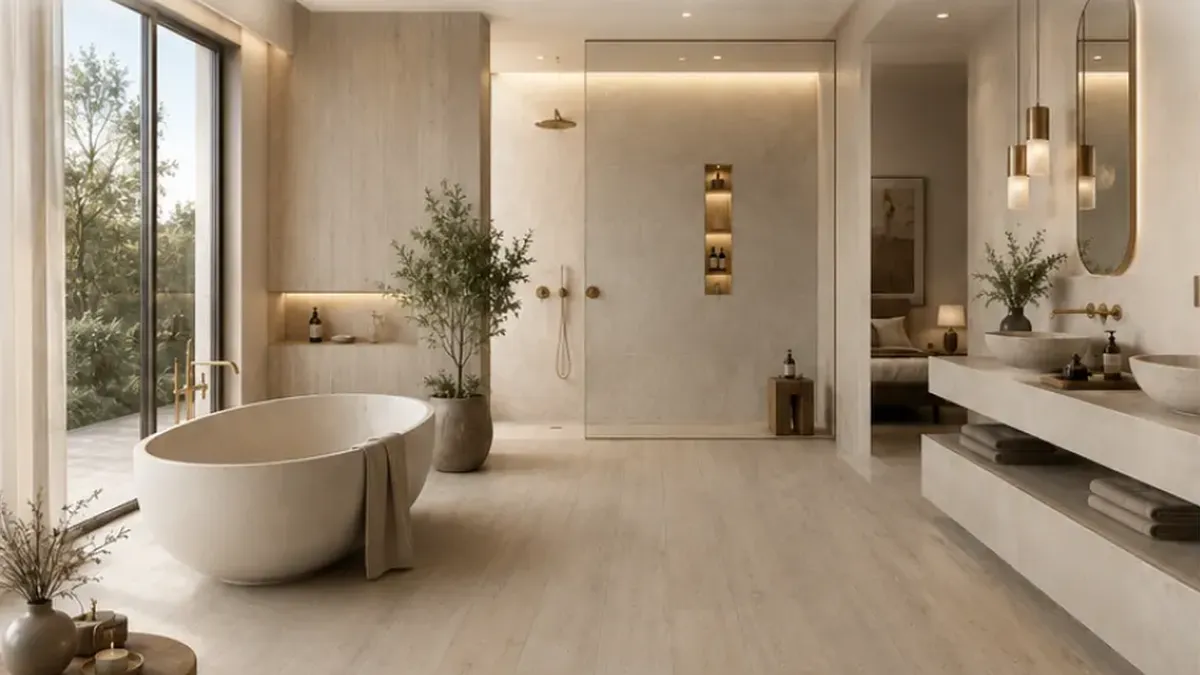
For a bathroom you plan to keep, porcelain is the better floor: water does not harm it, it suits underfloor heating and it runs into a walk-in shower. Luxury vinyl tile (LVT) suits joists that cannot be stiffened, a tight floor height or a quick refresh, and should stop at the shower edge.
In this guide 10 sections
- Ten points, side by side
- Is LVT flooring good for bathrooms?
- When water gets underneath
- The Stanmore accessible bathroom: one floor into the shower
- Wear, dents and how long each floor lasts
- Warmth and grip underfoot
- Is LVT cheaper than tiling?
- Does LVT look cheap next to wood-effect porcelain?
- When LVT is the better floor
- Our verdict
The bathroom sits over the kitchen, nobody has lifted those floorboards in decades, and the vinyl oak samples on the kitchen table look far more convincing than you expected. Meanwhile a builder has told you that tile is the only proper bathroom floor. Both positions have something to them.
A note on where we stand: porcelain is what DDL sells, and we have no vinyl to offer. LVT still wins in some bathrooms, and those are named plainly further down.
Ten points, side by side
Here are the tests before the verdict. Porcelain leads on water, scratch resistance, heated floors and showers. LVT leads on warmth without heating, build-up height and speed of fitting. Wet grip and lifespan depend on the exact product, so the table says what to ask for rather than pretending there is one answer.
| Test | Porcelain | LVT |
|---|---|---|
| Water | Takes in almost none | Vinyl is waterproof; seams and edges are the risk |
| After a leak | Usually dried and left in place | Often lifted so the subfloor can dry |
| Surface wear | Very hard; an edge can chip under a heavy knock | Softer; grit, hot tools and bath feet can mark it |
| Lifespan | Surface does not wear through; grout is maintained | Set mainly by wear-layer thickness; check the guarantee |
| Warmth, unheated | Cool to bare feet | Warmer and quieter |
| Underfloor heating | Conducts heat well | Works within the maker's surface limit |
| Wet grip | Ask for the wet PTV of the finish | Ask for the wet PTV of the product |
| Walk-in shower floor | Yes, over tanking with falls | Most products are not made for it |
| Base needed | Flat and stiff; thicker build-up | Very smooth; thin build-up |
| Walls | The same tile can carry on upwards | Floor only |
How each is made explains most of that table. Porcelain is pressed and fired, so the wood or stone design sits in a dense body that takes up no more than half a per cent of its weight in water, the threshold for group BIa in BS EN 14411. LVT is layered: a backing, a vinyl core, a printed design film and a clear wear layer on top, and the thickness of that last layer largely decides how long the floor keeps its looks.
Is LVT flooring good for bathrooms?
Yes, for the floor outside the shower, provided the product and the fitting are right. The usual bathroom specification is glue-down LVT, bonded to a smooth prepared subfloor with the perimeter sealed.
Click LVT locks plank to plank over an underlay. It is quicker to lay but more exposed, because its joints are mechanical, and although some rigid-core versions resist water well, those joints remain the weak line.
The shower is where vinyl stops. A walk-in shower floor needs falls to the drain and full waterproofing beneath, and most LVT is not made for that job; the welded safety flooring used in care-home wet rooms is sheet vinyl, a different product altogether.
When water gets underneath
Both floors shrug off a splash. The difference shows at the joints and edges, and in what a leak costs you.
Vinyl does not absorb water, but seams, the perimeter and the cuts around the WC pan, pipes and bath panel can let it through. An overflowing bath or a weeping WC seal can track under the planks, weaken the adhesive and soak the boards below, all out of sight, and the usual remedy is to lift the floor so the subfloor can dry.
A porcelain floor in the same flood is usually mopped, dried and left where it is. Grout is its porous link, which is why a tanking membrane goes beneath the tiles in a shower and why epoxy grout earns its place there.
The Stanmore accessible bathroom: one floor into the shower
The clearest argument for porcelain in our own portfolio is the accessible bathroom in the Stanmore home. In its 3D visual, the large grey floor tile carries on from the vanity into a walk-in shower behind a glass panel, with no change of material where the shower begins. An LVT floor would have had to stop at that line.
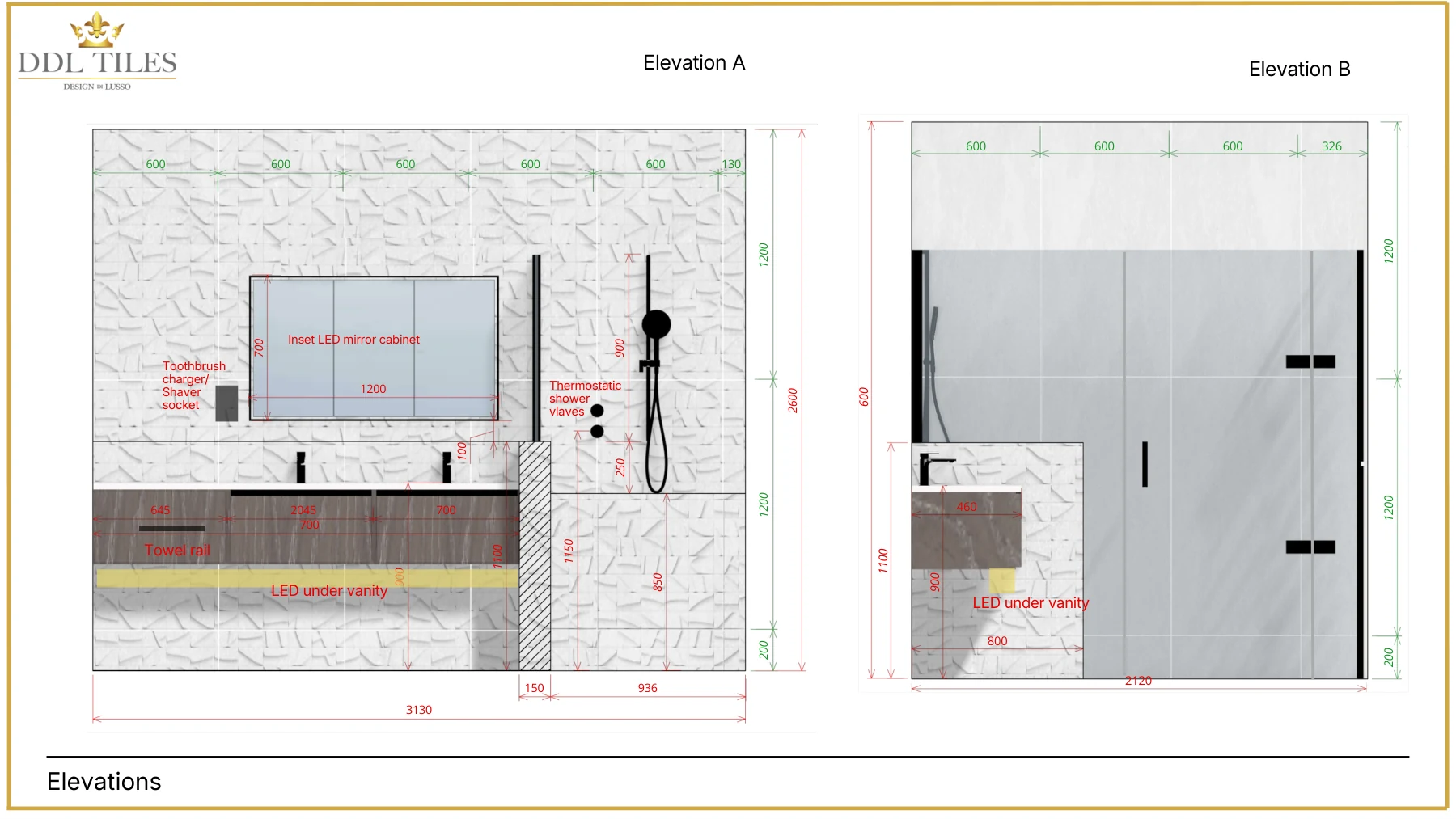
The drawings show what makes that possible. The plan places a long linear waste across the far end of a shower a little over two metres deep, so the floor falls in one plane and the tiles run straight to the drain with no envelope cuts. The vanity is a 2045mm wall-hung double unit, with light beneath it, so the floor runs on underneath and the room reads as one surface from the door to the shower wall.
Add underfloor heating and much of the warmth argument for vinyl falls away, as the next sections explain. The other Stanmore rooms are on the project page, and our guide to accessible bathroom design looks at this room in more depth.
If you are torn, put the two floors side by side. Book a complimentary showroom appointment and bring your favourite vinyl sample; we will set wood-effect and stone-effect porcelain beside it at full size, in real light. Bring the floor area in square metres, a photo of the room, and whatever you know about how the floor is built.
Wear, dents and how long each floor lasts
The fair answer is that both can last a long time, for different reasons, and both have a weak spot.
An LVT floor's life is set mostly by its wear layer, the clear top film that takes the traffic. When you compare products, ask for the wear-layer thickness in millimetres and the residential guarantee in years, then read what the guarantee excludes. Grit from shoes scratches that film, a hot styling tool left on the floor can mark it, and the narrow feet of a filled freestanding bath can dent it. Vinyl cannot be sanded or refinished, though a single damaged glue-down plank can usually be cut out and replaced.
Porcelain's surface does not wear through, and it ignores hair dye, bleach and straighteners if they are dealt with in reasonable time. Its weakness is impact. A heavy bottle landing on a tile edge can chip it, so put some spare tiles from the same production batch aside; on vinyl the same bottle tends to bounce, which counts for something in a children's bathroom.
When the bath and basin are replaced in years to come, a well-laid porcelain floor can often stay. Vinyl is easier to change if your taste moves on, and some owners see that as the point.
Warmth and grip underfoot
Without heating, LVT is the warmer and quieter floor. With underfloor heating, porcelain becomes the better one.
Unheated vinyl feels close to room temperature on a January morning and softens footfall, which helps in a bathroom above a sitting room. Unheated porcelain feels cool, because a dense tile draws heat from bare feet, and that is the honest drawback of any tile.
Heating turns it round. Porcelain conducts heat well, so a tiled floor warms evenly and holds the warmth, whereas LVT makers cap the surface temperature, which limits how much heat the floor can give out. Our guide to whether underfloor heating is worth it under tiles compares electric and water systems.
Grip when the floor is wet
Either can be a safe bathroom floor. Appearance tells you nothing here; the test result does.
Ask for the wet pendulum result, because HSE counts 36 or above as low slip potential. The R9 to R13 figures printed on many tile boxes come from a German ramp test in work boots over oil (DIN 51130), so treat them as a guide rather than an answer for bare feet. A matt or textured porcelain is the normal choice underfoot, with polished finishes kept for walls, while vinyl grip varies with its embossing and smooth vinyl with soap on it can be slippery.
Is LVT cheaper than tiling?
Usually, yes, to fit. Vinyl goes down faster on a thinner base, while porcelain needs more preparation and time for adhesive and grout to cure. We do not sell LVT, so we will not put a price on it; ask a vinyl fitter for a quote that includes the preparation.
For porcelain, DDL's bathroom cost guide gives a band for premium porcelain, marble-effect and stone-effect ranges: typically £60 to £200+ per m² supply-only. It also says underfloor heating typically adds £800 to £2,500 to a bathroom. The bigger variable is often what lies underneath:
- Porcelain over timber: stiffening where the joists flex, overboarding, an uncoupling membrane, and a floor true enough that no large tile sits proud of its neighbour.
- Porcelain in a shower: tanking, falls to the drain and the drain itself.
- Glue-down LVT: a plywood overlay or levelling compound, because every bump beneath the vinyl shows through.
- Either floor: the threshold where the bathroom meets the landing, which needs more thought for tile because its build-up is thicker.
Over the years, the sums turn on how long each floor stays down, which brings you back to the wear layer and to how long you plan to keep the room.
Does LVT look cheap next to wood-effect porcelain?
Good LVT does not look cheap at a glance, especially in oak. The tells show across a larger floor and close up: a range has a set number of plank prints, so a repeated knot is easy to spot once you have seen it, and a click floor can sound slightly hollow underfoot.
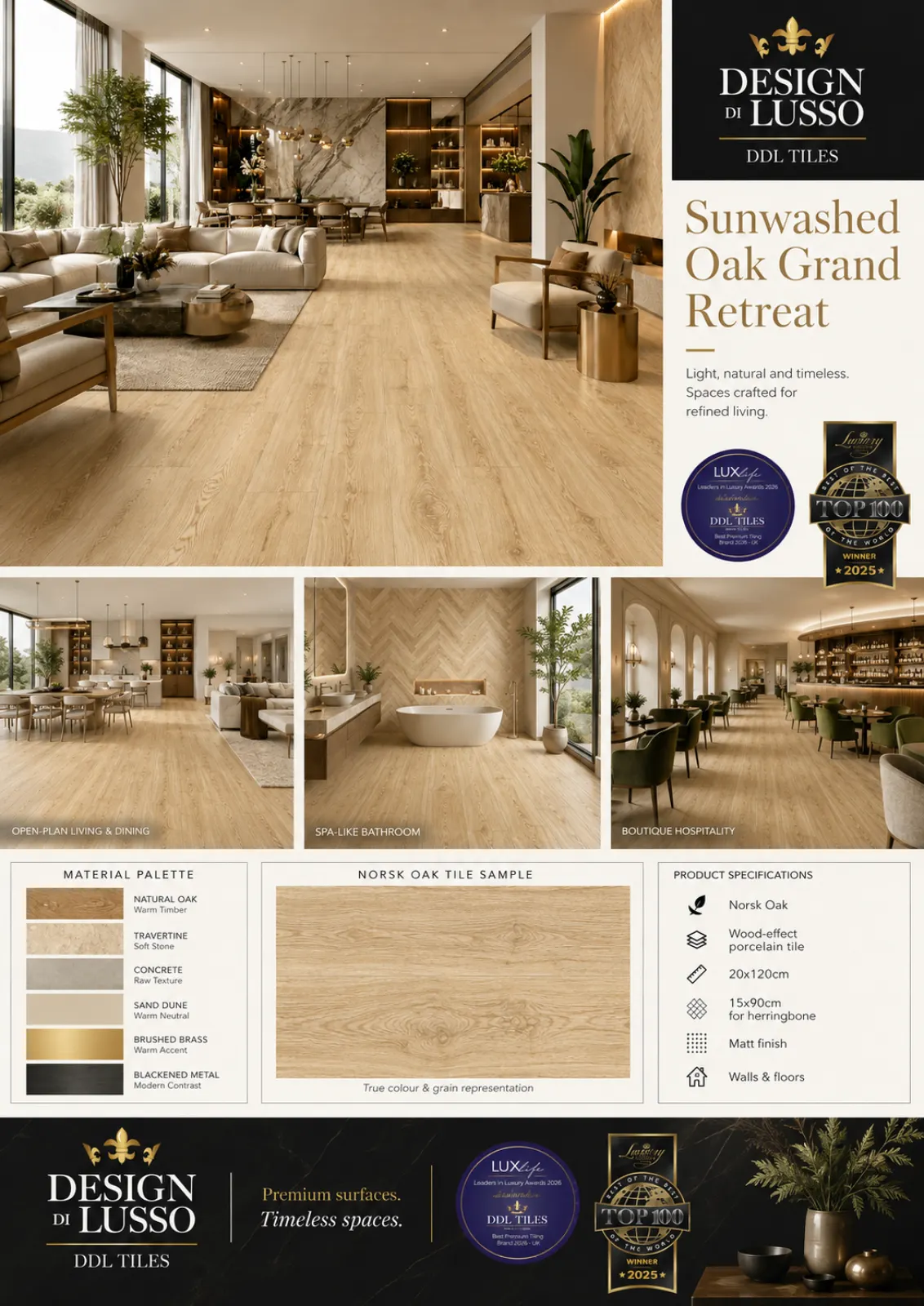
Wood-effect porcelain uses more face variations and a surface textured to follow the grain. Underfoot it feels cool and hard, like stone rather than timber, so its realism is visual rather than tactile. Norsk Oak, one of the wood looks on our look book boards, is a useful reference: its board lists a matt finish, 20x120cm planks for walls and floors, and a 15x90cm size for herringbone.
Stone looks are where porcelain pulls clearly ahead. Marble, stone, onyx and concrete looks come in sizes up to 1200x1200mm and can climb the walls and line the shower, so the room reads as one material. Our large format tile guide explains how those formats behave.
When LVT is the better floor
When the structure, the floor height or the timescale rules tile out, or when the floor is not meant to last. In those rooms vinyl is the right choice, not a compromise.
- Joists you cannot stiffen. In some period houses, reaching them means taking down a decorated ceiling below, and vinyl tolerates slight movement that would crack tile.
- No height to spare at the door, where a tiled build-up would leave a step down onto the landing carpet.
- A refresh before a sale or a let, or a stopgap until a full renovation.
- A children's bathroom without underfloor heating, where warmth and a softer landing for dropped bottles count for more than permanence.
Porcelain is the better floor for a main bathroom or en-suite you intend to keep, for any floor that continues into a walk-in shower, and wherever heating is planned. If a jointless mineral look appeals more than warmth, read our comparison of microcement and porcelain.
Our verdict
Porcelain is the floor to choose for a bathroom you intend to keep: it takes up almost no water, survives a leak in place, suits underfloor heating and can continue into a walk-in shower. LVT is warmer and thinner, and it is the right floor where joists cannot be stiffened, the threshold height is tight or the room is due a quick refresh. If you choose vinyl, compare wear-layer thickness and the residential guarantee, and stop it at the shower edge. DDL designs and specifies; your installer works from the written specification.
The quickest way to settle it is to stand on both. Book a complimentary showroom appointment in Watford and bring a note of how the floor is built and whether heating is planned. Where the floor needs working out on plan, with quantities, setting-out and the build-up over timber, the project consultation is £280 + VAT, credited against your final order if you proceed within 60 days.
Sources
- Health and Safety Executive, slips and trips guidance, including how floor slip resistance is assessed.
- HSE GEIS2, on the pendulum test: a wet result of 36 or above means low slip potential.
- BS EN 14411, the ceramic tile standard; group BIa covers porcelain at 0.5% water absorption or below.
- DIN 51130, the German ramp test method behind R9 to R13 ratings.