Porcelain is the best tile for most fireplaces: it will not burn, needs no sealing and wipes clean of soot. Clad the chimney breast in a large format or a marble or onyx look, keep the hearth matt, and choose the fire before the tile. A warm stone or travertine look forgives soot far better than bright white.
In this guide 10 sections
- Ten fireplace tile ideas
- Which tile is best for a fireplace?
- Cladding the whole chimney breast
- Plan the hearth with the floor, not after it
- Victorian and Edwardian fireplaces: restore before you replace
- Seeing marble and onyx looks at full height
- Stove, open fire, gas or electric: what changes for the tiles?
- Do you need special tiles, adhesive or grout around a fireplace?
- Should fireplace tile be matt or glossy?
- When to leave the fireplace alone
Picture the front room of a Victorian house in October. The cast-iron insert is worth saving, three of the hearth tiles are cracked, and the chimney breast has been painted more times than anyone can count. For the next six months the fire will be the centre of the room again, and it is the one wall that has to live beside real heat.
The look is the enjoyable part. What keeps it looking right after ten winters is everything behind it: the fire, the backing wall, the adhesive and the way the hearth meets the floor.
Ten fireplace tile ideas
- Clad the whole chimney breast, floor to ceiling, in 600x1200mm or 1200x1200mm porcelain.
- Choose a warm travertine or limestone look, which suits a period room and a new extension equally well.
- Mirror two book-matched marble-look tiles about the centre line of the fire.
- Put onyx above the mantel line, where it catches the firelight, and keep everything below it matt.
- Run the floor tile straight into the hearth.
- Wrap the surround and hearth in one strong marble look, so the fireplace reads as a single sculpted piece.
- Give a period hearth its own contrasting stone look, sized to the opening.
- Restore an original Victorian tiled insert rather than replacing it.
- Set a long, low linear fire into a deeply textured stone-look wall.
- Stretch the hearth into a raised plinth across the full width of the breast, with a log store at one end.
Which tile is best for a fireplace?
Porcelain, for almost every fireplace. Being non-combustible is no special advantage, because no fired ceramic tile will burn. What sets porcelain apart is density: it sits in group BIa under BS EN 14411, absorbing 0.5% water or less, so soot, ash and the dust from the log basket stay on the surface and the tile never needs sealing in use, though some polished finishes take a one-off treatment before grouting.
Natural marble and limestone have the longer history on hearths, and they still look wonderful. They need sealing, though, they mark more easily, and the softer stones can hold a soot stain for good. A marble, stone or onyx look in porcelain gives you the character without the upkeep.
The surround and the hearth do different jobs. The surround mostly takes radiant heat and is judged on how it looks, so large formats, a polished marble look or the glazed tiles of a period insert all have a place there. The hearth takes heat, falling embers, fire irons and a log basket dragged across it every evening, so it wants a dense porcelain in a matt or honed finish, in a format big enough to keep the joints few. Glazed ceramic is traditional on period side panels and too soft underfoot.
The tile itself is a modest part of the budget. DDL's published cost guide puts premium porcelain, marble-effect and stone-effect ranges at typically £60 to £200+ per m² supply-only, and a surround and hearth together cover only a few square metres.
Cladding the whole chimney breast
Taking tile from floor to ceiling turns the chimney breast into one surface instead of a tiled panel around a fire, and in a large format it needs only a handful of joints. With so few joints, each one is noticed. Where they fall is the whole design.
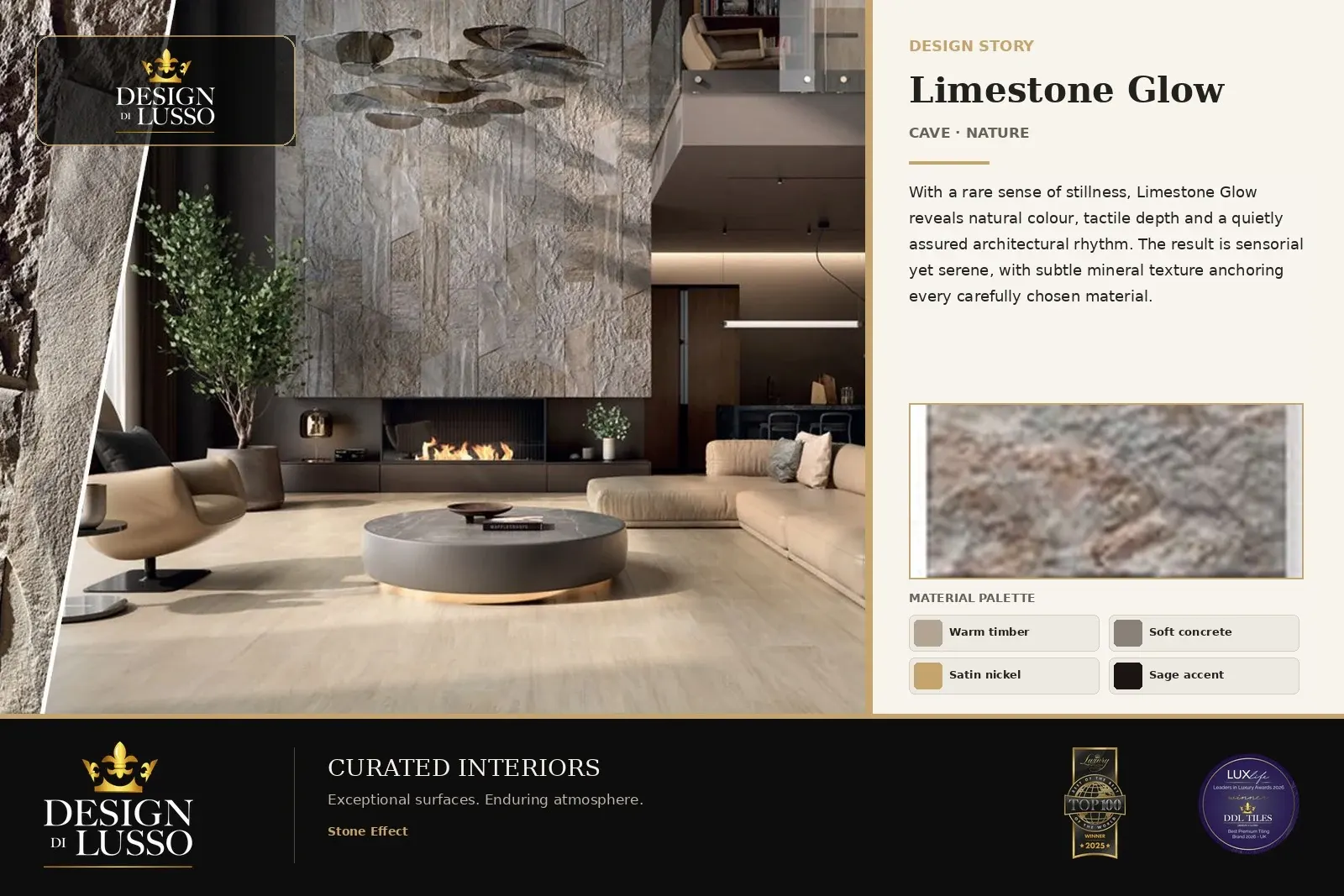
- Set out from the centre of the fire, not from a corner, so the joints sit symmetrically about the centre line or one runs exactly through it. A joint a few millimetres off-centre is the first thing the eye finds.
- Make the cuts around the opening clean and deliberate, never a thin sliver down one side.
- Decide how the tile finishes at the corners of the breast: a mitred edge, a slim metal trim or a return into the alcove.
- Straighten the wall first. Old chimney breasts are rarely flat, and a large tile turns every bow behind it into a lip at the joint.
DDL's large format porcelain runs from 600x600mm up to 1200x1200mm, and a well-planned 1200mm format comes close to the look of a slab without the handling a slab demands. Our complete guide to large format tiles and slabs goes further into sizes, flatness and handling.
Plan the hearth with the floor, not after it
The hearth is where the fireplace meets the room. Chosen late, it usually ends up as a compromise between two finishes, so decide it alongside the floor. Three approaches work, each in a different kind of room.
Continuous. The floor tile runs straight into the hearth, so the fire sits on the same surface as the room. Calm and modern, it suits large-format floors and open-plan spaces, but the floor then has to be set out from the fireplace rather than from the door, or the joints will meet the opening at random.
Contrasting. A raised or inset hearth in a different stone look, sized to the opening, belongs in period rooms and on timber or wood-effect floors, where the hearth should read as an object in its own right.
Wrapped. Surround and hearth in the same tile. Strong marble and onyx looks suit it best.
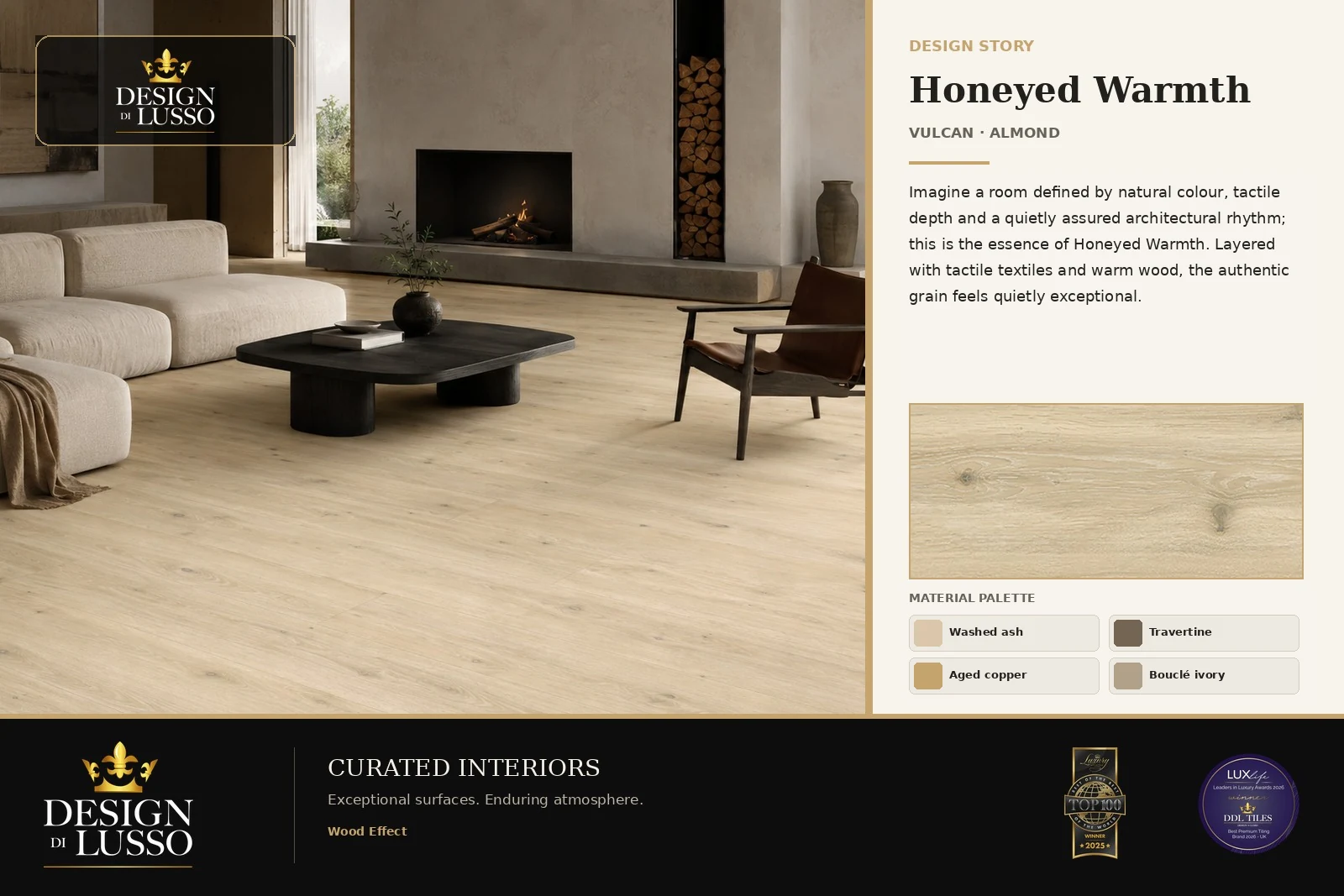
Whichever you choose, avoid a hearth that is nearly but not quite the colour of the floor. It looks like a mismatch, not a decision.
If you want a fully flush hearth, check with your installer or building control that it is acceptable for your appliance, because Approved Document J covers how a hearth is built and how its edge is marked.
Victorian and Edwardian fireplaces: restore before you replace
If the original fireplace is still there, with its cast-iron insert, tiled side panels and tiled hearth, restore it, even with a few damaged tiles. A specialist in period fireplaces is the right person for the broken pieces. A generic new surround removes character that no tile puts back.
Where the original has gone, there are two honest routes. One is to reinstate the period look, with a reproduction insert, glazed side tiles and a hearth that suits the age of the house. The other is to let the fireplace be the one modern element in the room: keep the cornice, the skirting and the proportions, and make the chimney breast quietly contemporary, with a stone-look porcelain hearth, a simple surround and calm walls either side, which works precisely because everything around it is still unmistakably Victorian.
What rarely works is the halfway house: a reproduction mantel with a glossy modern tile, or a period insert fighting a busy pattern. Give the fireplace one story and let the room support it.
Seeing marble and onyx looks at full height
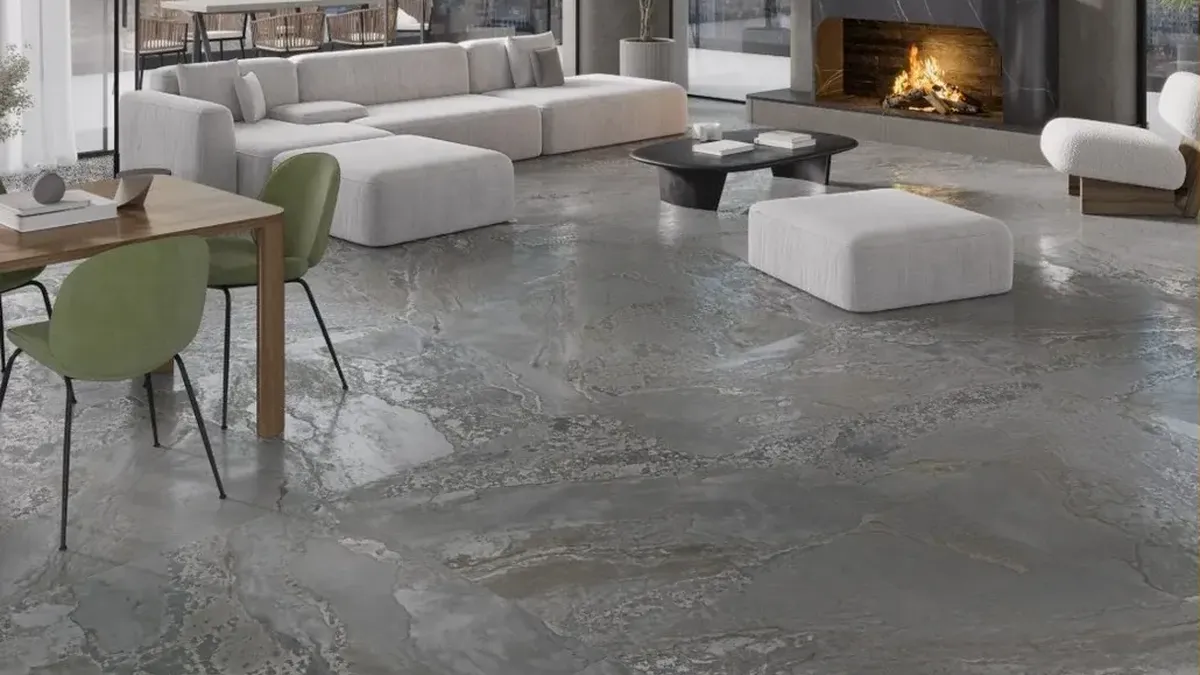
Onyx and marble looks are hard to judge from a 30cm sample. Their appeal is the movement of the vein across a large piece and the way the surface takes the light, and a small square in your hand shows neither. In the showroom you see them at full height, in porcelain DDL sources from selected Spanish and Italian factories, in formats up to 1200x1200mm, next to your floor sample in real light.
Sourcing is where DDL began. Dinesh Mathur founded the business in 2011 to find the right tile for architects and interior designers, and the Watford showroom still works by appointment only, so the time you book is spent with a specialist on your fireplace rather than wandering the aisles. Where the hearth is part of a bigger change, such as a new floor through the living room or alcove joinery either side of the breast, the floor, the hearth and the cabinetry are best decided in one conversation.
Bring a sample of your floor, a photograph of the chimney breast and details of the fire you have in mind to a complimentary showroom appointment. Add the rough square metres of the surround and hearth, and we can quote from the area you give us.
Stove, open fire, gas or electric: what changes for the tiles?
The fire decides where the heat goes and who signs off the work. The manufacturer's instructions and Approved Document J set the hearth, clearance and construction requirements for each appliance, so confirm them with your installer or building control before the design is fixed.
| Fire | What the tiles face | Who installs or signs off | Design note |
|---|---|---|---|
| Wood-burning or multi-fuel stove | Concentrated heat on the hearth and rear wall | HETAS-registered installer, or building control | Specify adhesive, grout and backing for heat |
| Open fire | Direct heat, soot and ash at the opening | HETAS-registered installer, or building control | Matt tiles and darker grout near the opening |
| Gas fire | Heat around the opening, set by the model | Gas Safe registered engineer | Use only finishes the manufacturer allows |
| Electric fire | A cooler surface, with warm air from a vent | Registered electrician for new circuits | Plan the vent position and service access |
A stove puts concentrated heat into the hearth and the wall behind it. The tile is rarely the weak point; the adhesive, the grout and the backing are. An open fire adds soot and ash at the opening, so the tiles nearest the fire work hardest and should be the easiest to clean.
Electric fires run much cooler at the surface, which widens the choice of tile and moves the questions to the vent and to whatever sits above it. Where an electric fire goes under a television, the tile and the joinery become one design, and our media wall ideas cover that wall in full.
Do you need special tiles, adhesive or grout around a fireplace?
Not special tiles, because porcelain already copes with heat. You do need the right adhesive, grout and backing, each with its own heat limit, and the weakest of them decides what the whole surround can take.
- The adhesive has to stay bonded through years of heating and cooling, so its manufacturer's temperature guidance must suit the fire.
- Cement-based grouts are generally the safer choice close to real heat. Epoxy grouts resist stains well, but many have lower temperature limits.
- Heat makes the wall and the tiles move, so large formats need movement allowed for at the edges and junctions, or it shows up as cracked tiles and grout.
- Tiling over a combustible backing does not make it non-combustible. Timber, an unsuitable board or crumbling plaster has to be put right first.
All four belong in the specification, decided before the tiler arrives. DDL designs and specifies; your installer works from the written specification. Near an open fire or stove, a mid-tone or darker grout ages far better than bright white.
Should fireplace tile be matt or glossy?
Matt or honed on the hearth and the tiles nearest the fire; gloss, if you want it, higher up. Polished surfaces show soot smears, ash and every scuff from the log basket, while a polished marble or onyx look on a chimney breast that is looked at rather than used catches the firelight beautifully. Glazed tiles are part of the character of a period insert and should stay. Our comparison of matt and polished tiles covers the trade-off in more detail.
When to leave the fireplace alone
Sometimes the right advice is not to tile yet, or not at all.
- The original period fireplace survives. Restore it.
- The fire is not chosen. The appliance decides the hearth and the clearances, so tiling first is the most reliable route to tiling twice.
- The chimney breast shows damp or tar staining. Old chimneys can push both through the plaster, and tiles hide the symptom rather than the cause.
- A timber mantel is part of the design. Tiling does not change the clearance needed between the fire and a combustible shelf.
When fireplace tiling fails, it fails in familiar ways: tiles cracking near the opening, grout crumbling or discolouring, tiles lifting off the wrong adhesive, a lip at every joint because the wall was never straightened. Almost every one was a decision, not bad luck.
A fireplace tile is best chosen standing in front of it. Book a complimentary showroom appointment at our Watford showroom, open seven days a week by appointment. If the hearth and a new floor need setting out together from your drawings, the Project Consultation Service is the next step, at £280 + VAT, credited against your final order if you proceed within 60 days.
Sources
- Approved Document J: combustion appliances and fuel storage systems (GOV.UK)
- HETAS: registered installers for solid-fuel appliances
- Gas Safe Register: the official register of engineers legally allowed to work on gas appliances
- BS EN 14411: ceramic tiles, definitions and classification (porcelain is group BIa, water absorption 0.5% or less)